A painter of psychological consequence — exploring transformation and the moral architecture of identity through expressive portraiture.”
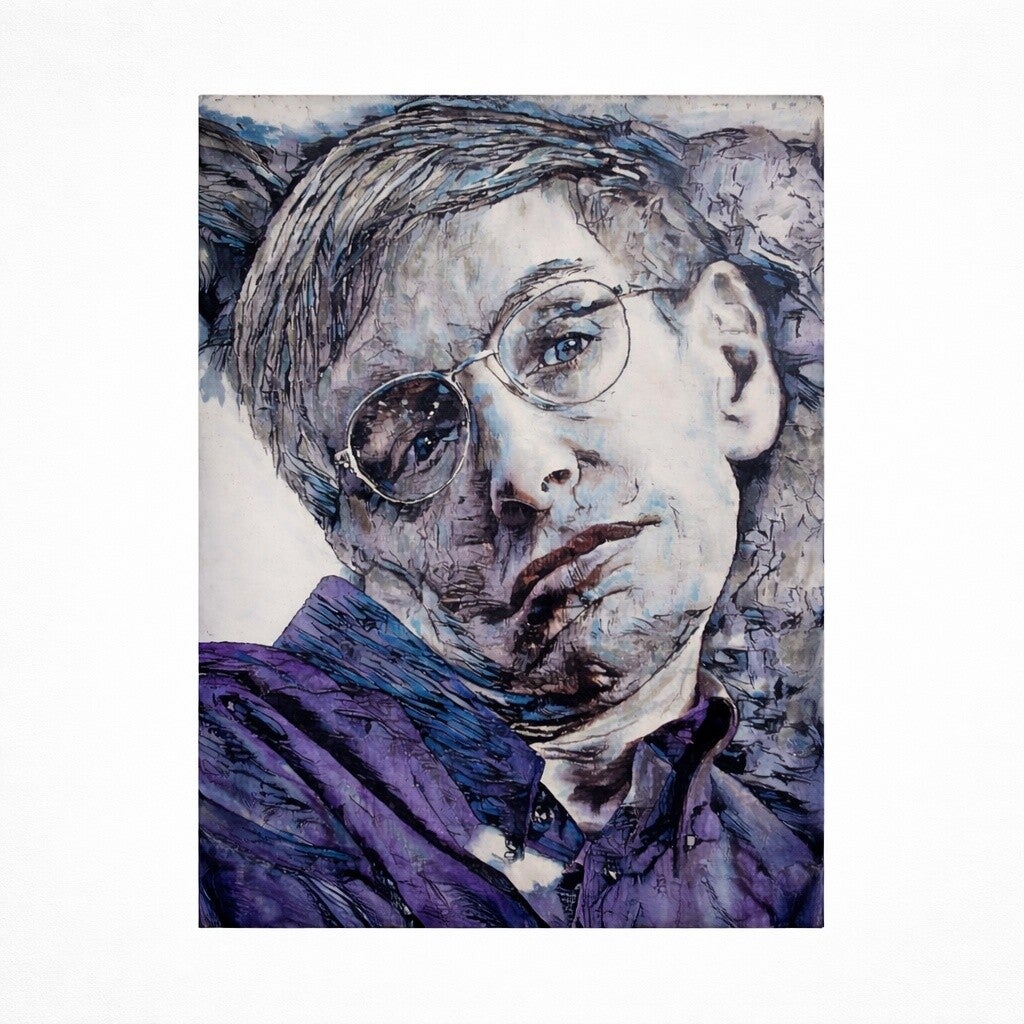
Stephen Hawking
“Infinite Mind”
This portrait considers Stephen Hawking not as a public figure, but as a presence shaped by intellect, fragility, and endurance. The work focuses on interior intensity rather than biography, allowing the surface to fracture and reform around expression. The result is a study of thought made visible.
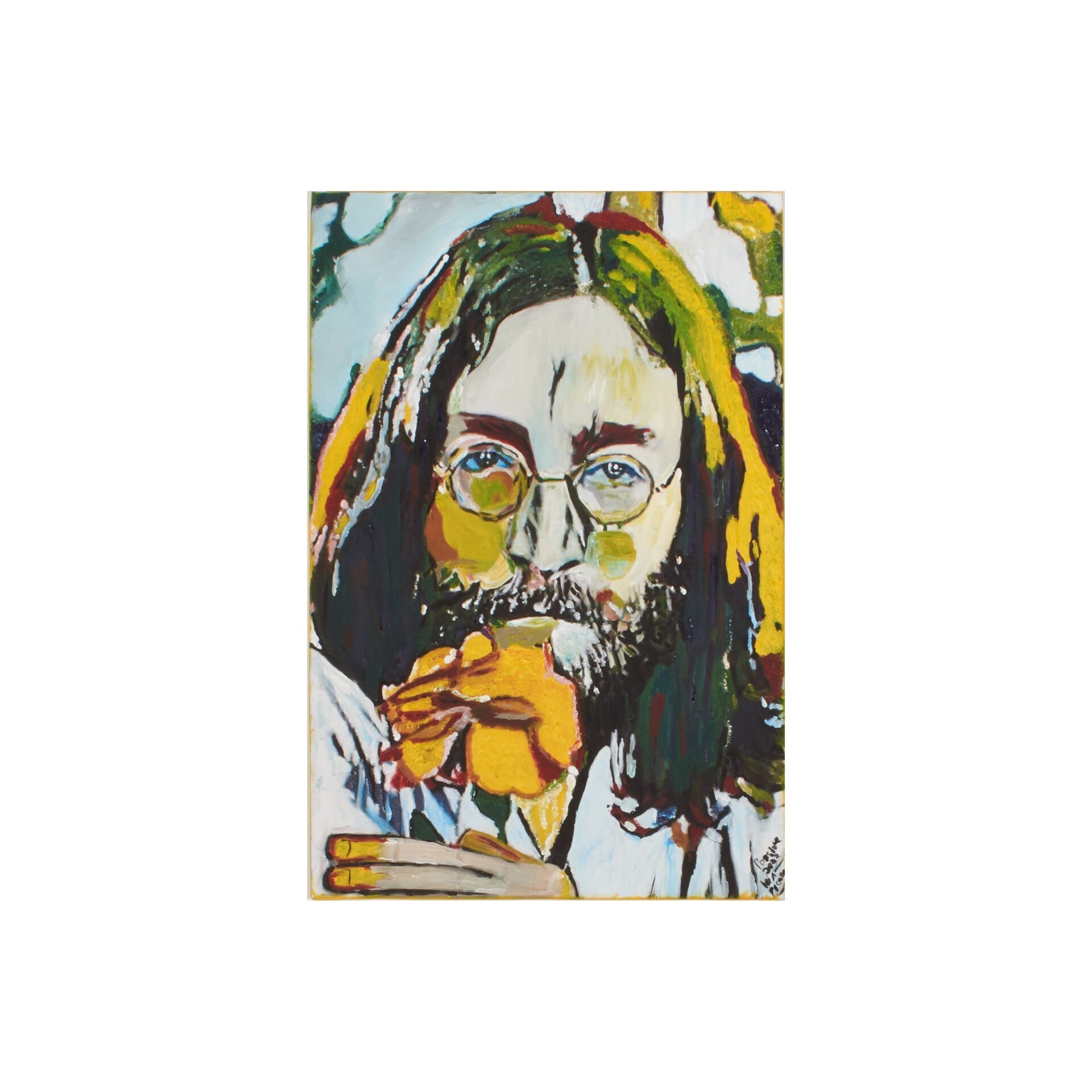
John Lennon
The Hand of Guernica brings John Lennon into quiet dialogue with Pablo Picasso. The raised hand, drawn from Guernica, gestures toward a shared opposition to violence and the human cost of conflict. Rather than homage, the work examines how artists confront war through image and voice, and how influence passes between generations.
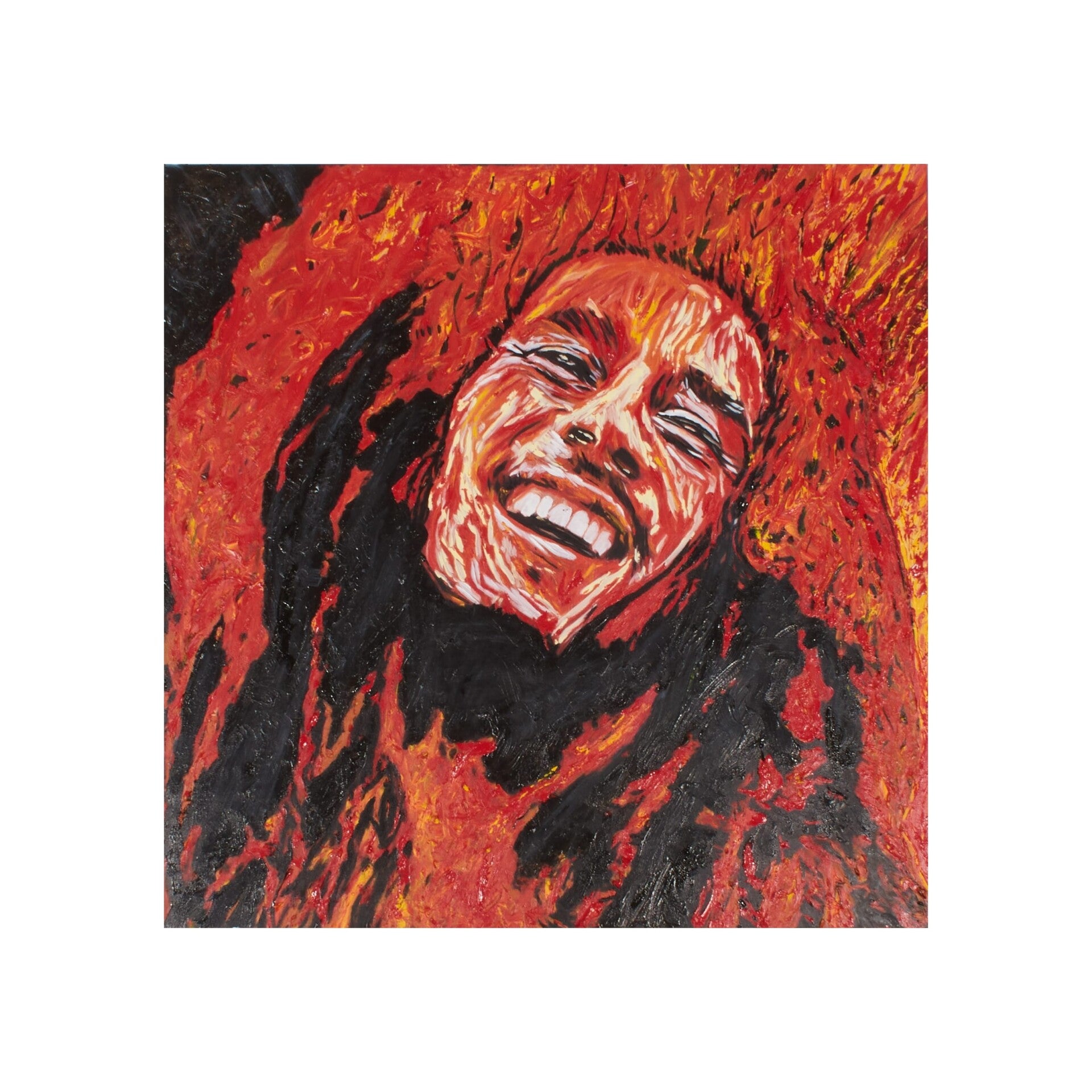
Bob Marly
Fire Within
In Fire Within, Marley is rendered as if illuminated from the inside. The surrounding heat reflects conviction rather than destruction, suggesting the force of belief that shaped both his music and his stance against injustice.
Humphry Bogart
After the Spotlight
In this portrait of Humphrey Bogart, the emphasis shifts from performance to presence. Stripped of cinematic glamour, he appears reflective and self-contained — a man shaped by the roles he inhabited and the weight they carried. The fractured colour planes resist romanticisation, instead suggesting endurance and inner gravity. This is not the icon on screen, but the individual behind it.


Audrey Hepburn
Composure
This portrait of Audrey Hepburn shifts attention from elegance to endurance. Stripped of cinematic sentiment, she appears self-contained and deliberate, her gaze steady rather than ornamental. The surrounding colour moves with energy, yet she remains composed within it. The work considers strength not as display, but as restraint — a quiet authority shaped by experience rather than image.
Richard Dawkins
Deliberation
This portrait of Richard Dawkins presents a moment of inward consideration rather than public argument. The angled light suggests examination rather than revelation, while the gesture of the hand introduces a sense of intellectual weight. The work reflects on the gravity of conviction shaped through sustained inquiry.


David Bowie or is it Ziggy
Construct
Acrylic on canvas, A1
This portrait of David Bowie as Ziggy Stardust considers the gravitas of self-creation. With the eyes closed and expression inward, the work shifts from spectacle to introspection. The vivid colour suggests performance, yet the stillness implies something more personal — the search for identity beneath image. The painting reflects on the weight carried by those who build themselves in order to reveal who they truly are.
Shakespeare
Language
Acrylic on canvas, A1
This portrait of William Shakespeare considers the weight of authorship. Rather than historic reconstruction, the figure is rendered through expressive colour and layered texture, suggesting the depth and complexity of the human interior he articulated. The work reflects on language as a force that shapes identity, morality and consequence.


Albert Einstein
The Weight of Thought presents Albert Einstein not as a symbol of genius, but as a man carrying the burden of ideas that reshaped the world. His hands, clasped beneath his chin, suggest both contemplation and responsibility — a mind aware of the consequences of its own discoveries.
Colour is used not to decorate but to reveal inner turbulence: flashes of intensity beneath a composed exterior. This portrait examines the cost of brilliance — the tension between imagination, morality and the lasting impact of thought.
Grace Kelly
Becoming Grace
Acrylic on canvas, A1
This work reflects a moment suspended between identities. The figure is neither fully public nor entirely private — poised within a space that feels both constructed and luminous. The bold yellow backdrop suggests exposure, expectation and the weight of visibility, while the fractured forms surrounding her hint at structure, duty and the architecture of role.
Rather than portraying glamour, the painting explores transition. Grace Kelly moved from celebrated actress to princess — from performance to permanence. That transformation carried elegance, but also surrender.
The piece invites a quieter reflection: when we evolve, what do we gain — and what do we relinquish? In becoming what the world requires, how much of ourselves remains untouched?


Freddie Mercury
The Man Behind the Voice
Acrylic on canvas, A1
This portrait steps away from performance and toward interior presence. Rather than capturing spectacle, it reflects the space between it — the moment where persona dissolves and the individual remains.
Freddie Mercury embodied transformation: private identity evolving into public force, vulnerability coexisting with command. The restrained palette and controlled composition suggest reflection beneath confidence, asking the viewer to consider the cost of visibility.
Beyond fame, beyond stage, the work explores a quieter question — who are we when the applause fades?
Nikola Tesla
The Quiet Current
Nikola Tesla
Acrylic on Canvas | A1
Nikola Tesla is remembered for electricity, invention and rivalry, yet beneath the mythology was a mind defined by stillness. Innovation is often imagined as explosive, but more often it begins in silence — in sustained, disciplined thought.
In this portrait, the energy is not theatrical. It is contained. The restrained palette of blue and charcoal reflects a mind operating beneath the surface — precise, focused, unwavering. The faint electric tones suggest power present but not yet discharged.
Tesla represents a human trait that shapes progress: concentrated imagination. The ability to hold an idea steadily, without distraction, until it reshapes reality.
The question is not whether we possess energy — we all do. The question is whether we disperse it… or focus it.


Meher Baba
Surrender
Meher Baba
Acrylic on Canvas | A1
In a world driven by assertion, ambition and certainty, surrender is often misunderstood as weakness. Yet there are moments in every life when strength lies not in control, but in release.
This portrait explores the human need to lay down resistance — to accept, to trust, to allow. The stillness of the closed eyes contrasts with the restless movement of the background, suggesting a quiet centre within turbulence.
Surrender is not defeat. It is the conscious decision to stop fighting what cannot be changed and to listen inward instead.
Where in your life are you still resisting — and what might shift if you allowed yourself to let go?